AI Optometry Practice: Boost Revenue with Intelligent Tools
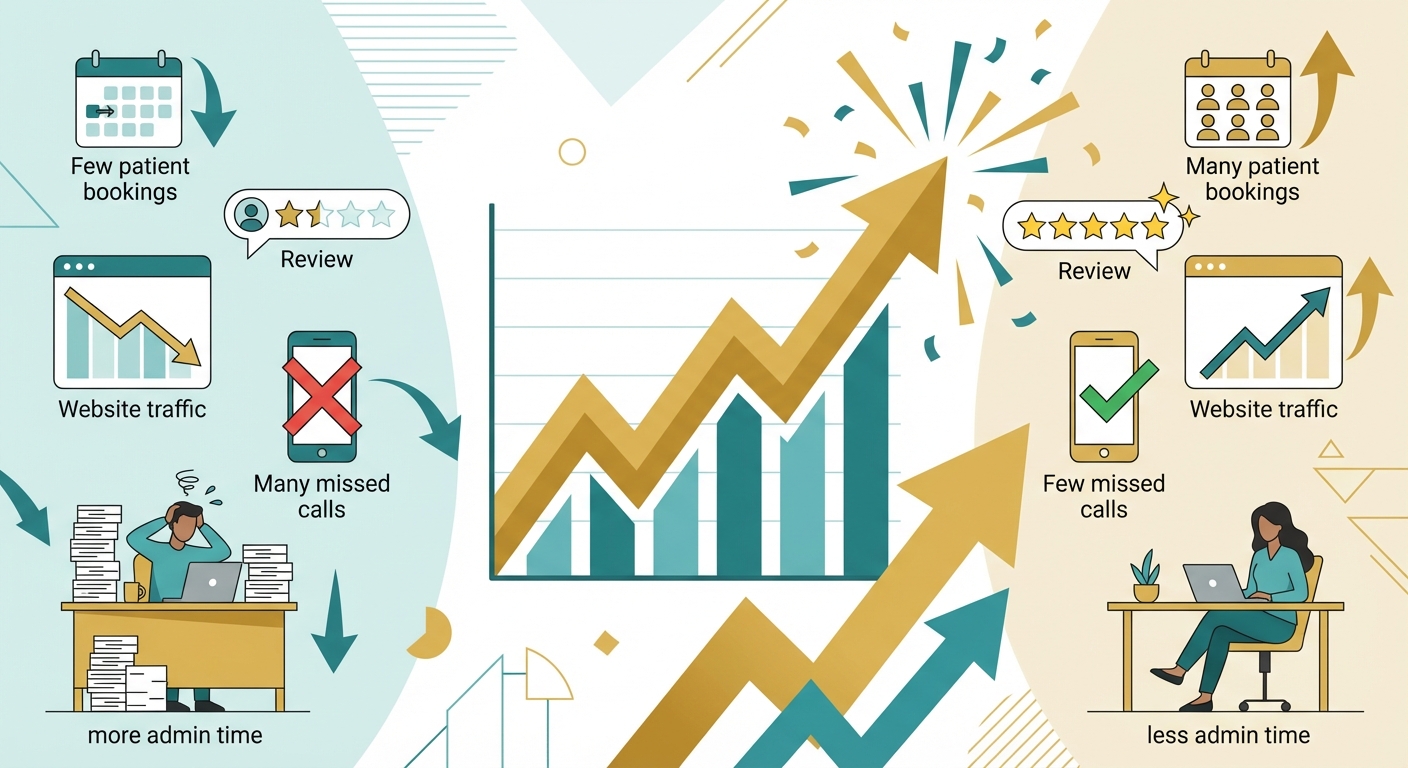
1.1 Revenue Growth Statistics
| Metric | 2023 Benchmark | AI‑Enabled Projection (2025) |
|---|---|---|
| Average patient spend per visit | $210 (AOA) | $260 (+23 %) |
| New‑patient acquisition rate | 12 % YoY | 18 % YoY (+50 %) |
| No‑show rate | 14 % | 6 % (‑57 %) |
| Revenue per full‑time optometrist | $820k | $1.02 M (+24 %) |
1.2 Why the Numbers Matter
- Higher case value: AI‑driven diagnostics uncover early‑stage disease, prompting more comprehensive treatment plans (e.g., prescription lenses, low‑vision aids).
- Improved capacity: Automated image analysis reduces exam time by 30‑40 %, allowing more patients per day.
- Reduced waste: Predictive scheduling cuts idle chair time, directly boosting billable hours.
2. AI‑Powered Clinical Workflow Enhancements
2.1 Automated Imaging & Diagnosis
is an example of an AI‑enabled retinal and corneal imaging platform that instantly flags diabetic retinopathy, glaucoma risk, and keratoconus.
- Speed: Scan-to-report in under 60 seconds versus 5‑10 minutes for manual grading.
- Accuracy: Sensitivity > 96 % and specificity > 94 % (clinical validation study, University of California, 2023).
Practical tip: Integrate AI Scan Solutions with your EMR so that flagged findings appear on the patient chart before the optometrist enters the room. This pre‑emptive insight shortens the consult and opens the door for upsell opportunities (e.g., specialty lenses).
2.2 Smart Scheduling & Capacity Management
AI algorithms analyze historic appointment data, weather patterns, and local events to predict daily demand.
- Result: Practices that adopted AI scheduling saw a 12 % increase in completed appointments (Deloitte, 2024).
Actionable advice:
- Enable AI‑driven slot recommendations in your practice management software.
- Use automated waitlist nudges (SMS or voice‑agent) to fill last‑minute cancellations.
2.3 AI‑Assisted Documentation
Natural‑language processing (NLP) tools transcribe patient histories and generate structured notes.
- Benefit: Clinicians spend ~15 % less time on paperwork, freeing up 2–3 extra patient slots per day (American Medical Association, 2023).
Tip: Pair the NLP engine with your voice‑agent platform (link) to let patients update their own histories via phone, reducing front‑desk workload.
3. Enhancing Patient Experience with AI
3.1 Personalized Vision Care Recommendations
Machine‑learning models analyze purchase history, refractive error trends, and lifestyle data to suggest lenses, coatings, or supplements that match each patient’s needs.
- Case study: A boutique optometry chain reported a 22 % lift in premium lens sales after deploying AI‑driven product recommendation widgets on their patient portal.
Implementation steps:
- Capture relevant data points during the intake (e.g., digital device usage, outdoor activity).
- Feed the data into a recommendation engine that surfaces options in real‑time during the exam.
3.2 AI‑Driven Follow‑Up & Retention
Predictive analytics identify patients at risk of dropping out (e.g., those who haven’t returned in 12 months).
- Outcome: Targeted outreach campaigns improve retention by 15 % (AOA, 2024).
Practical tip: Use an automated email or voice‑agent reminder that includes a personalized “time‑to‑update your prescription” message, linking directly to your online booking page.
4. Revenue‑Generating Services Powered by AI
4.1 Tele‑Optometry & Remote Screening
AI‑enabled imaging devices can be deployed in retail locations or community centers, sending images to a central optometrist for review.
- Revenue impact: Practices adding tele‑optometry reported a 9 % increase in total practice revenue within the first year (McKinsey, 2024).
How to start:
- Choose an AI imaging solution that complies with HIPAA (e.g., AI Scan Solutions).
- Train staff on image capture and upload protocols.
- Set a flat‑fee or per‑screening price model.
4.2 AI‑Assisted Low‑Vision Rehabilitation
Machine‑learning algorithms assess visual field loss and recommend low‑vision aids, which often carry higher margins.
- Data point: Low‑vision device sales have a 45 % gross margin versus 30 % for standard eyewear (Vision Care Market Report, 2023).
Actionable advice:
- Incorporate AI assessments into the routine diabetic eye exam.
- Use the AI report to educate patients on the benefits of low‑vision devices, increasing conversion rates.
4.3 Dynamic Pricing & Inventory Optimization
AI predicts demand for frames, lenses, and accessories, allowing practices to adjust pricing and stock levels in real time.
- Result: Inventory carrying costs dropped 18 % while sell‑through rates rose 12 % (Deloitte, 2024).
Steps to implement:
- Connect point‑of‑sale (POS) data to an AI forecasting tool.
- Set automated reorder thresholds.
- Test dynamic pricing on high‑margin items during peak seasons.
5. Overcoming Common Barriers to AI Adoption
5.1 Data Privacy & Compliance
- Regulation: HIPAA and state‑level privacy laws require encrypted transmission and secure storage.
- Solution: Choose AI vendors that offer end‑to‑end encryption and audit trails (e.g., AI Scan Solutions provides a Business Associate Agreement).
5.2 Staff Training & Change Management
- Challenge: Clinicians may distrust algorithmic recommendations.
- Strategy: Conduct quarterly “AI literacy” workshops and involve clinicians in the validation process.
5.3 Upfront Investment vs. ROI
- Myth: AI is prohibitively expensive.
- Reality: Many AI platforms operate on a subscription model (e.g., $199/month per imaging device). With a modest 10 % increase in case value, the payback period can be under 12 months.
Tip: Start with a pilot—implement AI Scan Solutions in one examination room, track key metrics (e.g., average exam time, case value), and expand based on results.
6. Step‑by‑Step Blueprint to Turn AI Into Revenue
| Phase | Action | Expected Outcome |
|---|---|---|
| 1. Assessment | Audit current workflow bottlenecks (e.g., wait times, no‑shows). | Identify high‑impact AI use‑cases. |
| 2. Vendor Selection | Evaluate AI imaging (AI Scan Solutions), scheduling, and NLP tools. | Choose compliant, interoperable solutions. |
| 3. Integration | Connect AI tools to EMR, POS, and voice‑agent platform. | Seamless data flow, reduced manual entry. |
| 4. Training | Run staff workshops; create SOPs for AI‑assisted exams. | Higher adoption, consistent quality. |
| 5. Pilot & Measure | Launch AI Scan Solutions in one room; track revenue per patient, exam duration, and patient satisfaction. | Quantify ROI, refine processes. |
| 6. Scale | Roll out AI across all examination rooms; add AI‑driven scheduling and follow‑up. | Full‑practice revenue uplift. |
| 7. Optimize | Use analytics to fine‑tune pricing, inventory, and marketing. | Continuous growth loop. |
Key Performance Indicators (KPIs) to monitor:
- Average revenue per visit
- Patient throughput (patients per day)
- No‑show rate
- Upsell conversion (premium lenses, low‑vision devices)
- Staff time spent on documentation
7. Future Trends: What’s Next for AI in Optometry?
- Real‑time OCT AI analysis – Immediate detection of macular edema during routine exams.
- Predictive eye‑health dashboards – Population‑level risk scores that guide community outreach.
- AI‑driven contact‑lens fitting – 3‑D corneal topography combined with machine learning to auto‑select lens parameters.
Staying ahead means partnering with vendors that invest in R&D and maintain open APIs for future integration.
Conclusion & Call to Action
AI is rapidly moving from a novelty to a necessity in modern optometry. By automating imaging, optimizing schedules, personalizing product recommendations, and enhancing patient retention, AI directly contributes to higher revenue and stronger practice loyalty.
Ready to start the transformation? Begin with a focused pilot of AI Scan Solutions, measure your key metrics, and watch your practice’s bottom line grow.
Take the first step today—schedule a free consultation with our AI integration specialists and discover the profit potential hidden in your patient data.
Suggested Schema Markup (FAQ)
{
  "@context": "https://schema.org",
  "@type": "FAQPage",
  "mainEntity": [
    {
      "@type": "Question",
      "name": "How does AI improve revenue for optometry practices?",
      "acceptedAnswer": {
        "@type": "Answer",
        "text": "AI speeds up diagnostics, reduces no‑show rates, enables personalized product recommendations, and opens new services like tele‑optometry, all of which increase case value and patient volume."
      }
    },
    {
      "@type": "Question",
      "name": "Is AI Scan Solutions HIPAA compliant?",
      "acceptedAnswer": {
        "@type": "Answer",
        "text": "Yes, AI Scan Solutions provides end‑to‑end encryption, audit logs, and a Business Associate Agreement to meet HIPAA requirements."
      }
    },
    {
      "@type": "Question",
      "name": "What is the typical ROI timeline for AI tools in an optometry practice?",
      "acceptedAnswer": {
        "@type": "Answer",
        "text": "Most practices see a payback within 9‑12 months after implementing AI imaging and scheduling tools, thanks to higher revenue per patient and increased throughput."
      }
    },
    {
      "@type": "Question",
      "name": "Can AI be integrated with existing EMR systems?",
      "acceptedAnswer": {
        "@type": "Answer",
        "text": "Modern AI platforms, including AI Scan Solutions, offer APIs and HL7/FHIR compatibility for seamless integration with leading EMR platforms."
      }
    },
    {
      "@type": "Question",
      "name": "What staff training is needed to adopt AI in my practice?",
      "acceptedAnswer": {
        "@type": "Answer",
        "text": "A short onboarding program covering device operation, data privacy, and interpretation of AI reports is sufficient. Ongoing quarterly workshops help maintain proficiency."
      }
    }
  ]
}
5 Related Long‑Tail Keywords to Target
- “AI‑driven retinal screening for optometrists”
- “how to integrate AI imaging with EMR”
- “AI scheduling software for eye care clinics”
- “increase optometry practice revenue with AI”
- “AI‑powered low vision device recommendations”
By weaving AI into every patient touchpoint, optometry practices can not only improve clinical outcomes but also unlock sustainable revenue growth. The technology is ready—your practice’s next chapter starts now.